
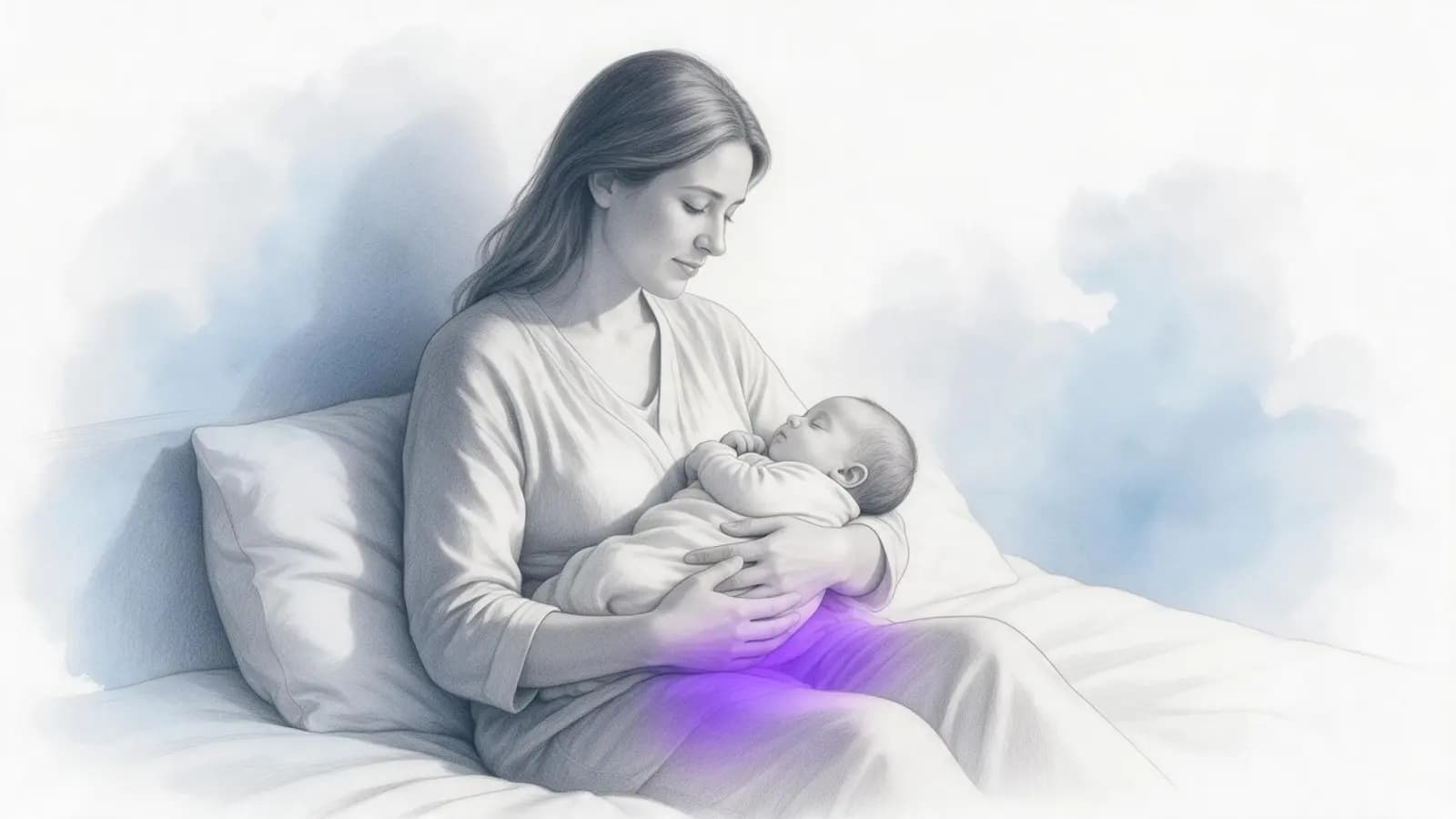
Your pelvic floor after giving birth: what is normal, and when to start exercising
Pregnancy and birth put a lot of strain on the pelvic floor. What is normal after birth, how to start pelvic floor exercises and when to see a professional.
During pregnancy the growing uterus and baby load the pelvic floor for months, and a vaginal birth stretches these muscles and the tissues around them considerably. That is why many women leak a few drops when they cough or sneeze in the weeks after birth, or feel their muscles are “not the same”. The good news: the pelvic floor can be trained, and most women recover well.
What is common after birth?
- Small leaks when coughing, laughing, sneezing or lifting the baby
- A feeling of heaviness or “emptiness” in the pelvic area
- Difficulty finding the muscles to squeeze
- Tenderness around stitches or a tear
Some of these ease by themselves in the first weeks. Leaking urine or wind that does not improve over months, a bulge or a feeling of something “coming down” in the vagina, or painful sex are symptoms that should be checked.
When can you start pelvic floor exercises?
Many health sources say you can start gentle pelvic floor squeezes soon after birth, once you feel comfortable. If you had a caesarean, an episiotomy, a deep tear or another complication, follow your doctor’s or midwife’s advice on when and how hard to start. Your postnatal check is a good moment to ask about your pelvic floor.
How to start
- Start lying down: It is easier to find the muscle on your back with your knees bent.
- Short, gentle squeezes: In the first days, a few light squeezes of a couple of seconds are enough.
- Work with your breath: Squeeze as you breathe out, let go as you breathe in; don’t hold your breath.
- Build up gradually: Over the weeks, work up to 10-second holds and 10 long and 10 short squeezes, three times a day.
- Link it to your day: Doing a set while feeding or settling the baby makes the routine easier.
What does the research say?
A 2020 Cochrane systematic review reports that women without leakage who did pelvic floor muscle training in pregnancy had a lower risk of leaking in late pregnancy and mid-way through the postnatal period. So pelvic floor exercise can be part of your routine during pregnancy too (with your doctor’s approval), not only after birth.
When to see a professional
- You are still leaking urine or wind a few months after birth
- You notice a bulge, fullness or heaviness in the vagina
- You have pain during exercise or sex
- You cannot feel the muscles at all
Pelvic health physiotherapists specialise in postnatal assessment and personalised programmes.
Keep your routine on busy days with PelviQ
With a new baby, time for yourself is measured in minutes. PelviQ is designed to fit your pelvic floor routine into those minutes:
- Short sessions from your phone: Start, stop and adjust device sessions in PelviQ App, even while the baby sleeps.
- EMS to feel the muscle again: Struggling to find the pelvic floor after birth is common. EMS pads help you recognise what a contraction feels like.
- Women’s version pads: The pads in the PelviQ set are designed specifically for women.
- Reminders and a plan: Guided Kegel and breathing exercises sit in your daily plan, and the app reminds you on the days you forget.
Start using EMS only after your doctor has given the go-ahead at your postnatal check; EMS is not used during pregnancy.
For more on the pelvic floor through life, see Pregnancy, postpartum and menopause.
Sources
- Cochrane (Woodley et al., 2020) — PFMT in antenatal and postnatal women
- NHS inform — Women’s pelvic floor muscles
- NHS — How to help a weak bladder
This article is for general information and does not replace medical diagnosis or treatment. See a healthcare professional if you have pain, bleeding, fever or ongoing symptoms.