
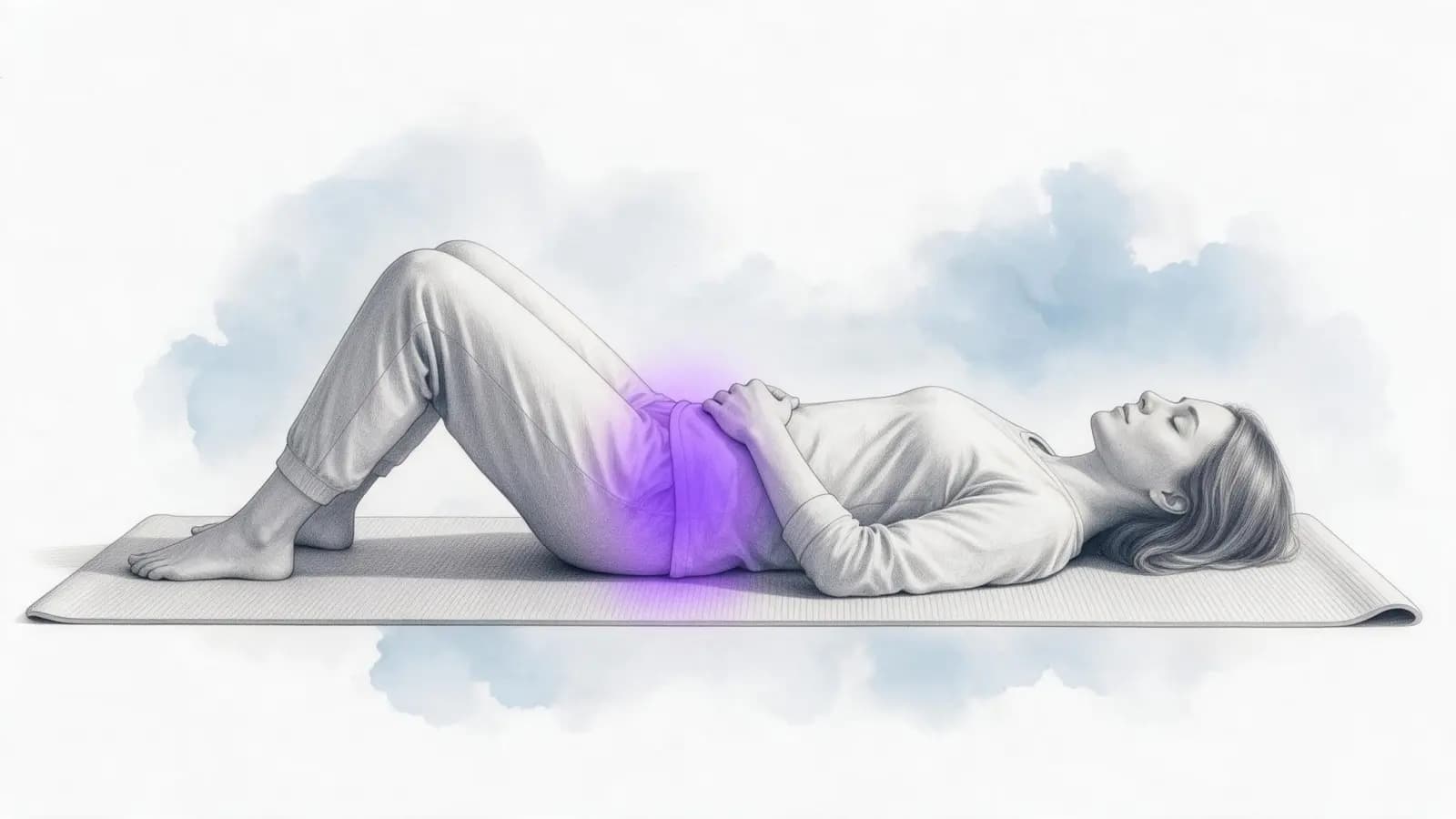
How to do Kegel exercises: a step-by-step guide to finding the right muscle
Kegel exercises only work if you engage the right muscle. Here is how to find it, how to do long and short squeezes, and a simple daily plan to start with.
A Kegel exercise means consciously squeezing and relaxing your pelvic floor muscles. Simple does not mean easy: many people tighten their tummy, buttocks or thighs on the first attempts and never reach the pelvic floor itself. This guide covers finding the muscle first, then the right technique and a steady plan to start with.
Where are the pelvic floor muscles?
The pelvic floor is a group of muscles stretched like a hammock across the base of the pelvis. It supports the bladder, the bowel and, in women, the uterus, and it helps you hold urine and wind, supports sexual function and stabilises the trunk. You cannot see these muscles, so you have to find them by feel.
Step 1: Find the muscle
- Holding in wind: Imagine stopping yourself from passing wind by drawing the back passage in and up. That lift is the back of your pelvic floor.
- Stopping urine: Imagine stopping the flow of urine midstream. You can try this once on the toilet just to recognise the muscle; making a habit of it can stop the bladder emptying properly.
- For women: A correct squeeze feels like a gentle lift and tightening around the vaginal opening.
- For men: A correct squeeze makes the base of the penis lift slightly and the testicles rise a little.
While you find the muscle, your tummy, buttocks and inner thighs should stay relaxed. Rest a hand on your belly to check it does not harden.
Step 2: Start in a comfortable position
Lying on your back with knees bent and feet flat is the easiest place to start, because gravity takes load off the pelvic floor. Once you can find the muscle easily, practise sitting and later standing. An empty bladder makes the exercises more comfortable.
Step 3: Learn two kinds of squeeze
Long squeezes (endurance)
Squeeze as you breathe out, hold for a few seconds, then let go completely. If you can hold for 3–5 seconds, start there and build up towards 10 seconds. Rest for at least as long as you held.
Short squeezes (quick response)
Squeeze quickly and let go straight away, roughly one squeeze per second. These help the muscle switch on fast when you cough, sneeze or lift something.
Step 4: Build a daily plan
NHS guidance suggests aiming for 10 long and 10 short squeezes, three times a day. It is normal not to manage this at first; start with what you can do and build up over the weeks. Consistency matters most: tying the exercise to a daily habit, like brushing your teeth, makes it harder to forget.
- Morning: one set lying in bed
- Midday: one set sitting down
- Evening: one set standing or before sleep
When will you notice a difference?
Pelvic floor muscles get stronger over time like any other muscle. Sources say it can take from a few weeks to a few months to feel a change. Research shows regular pelvic floor muscle training improves bladder leakage symptoms and quality of life in women, which is why many guidelines recommend it as the first step.
When to see a professional
If you cannot find the muscle, feel pain during the exercise, or still have symptoms after a few months of regular practice, talk to a physiotherapist or doctor. They can check your squeeze and suggest a programme that suits you.
How PelviQ supports this routine
The two hardest parts of Kegel exercise are really feeling the muscle and keeping it up for weeks. PelviQ focuses on exactly these two things:
- EMS that helps you feel the muscle: PelviQ’s electrode pads stimulate the pelvic floor muscles with gentle electrical signals. Knowing what a contraction feels like makes your own Kegels easier to do right.
- Extra support from motorized pads: The 2 motorized pads in the set add vibration and an electromagnetic field to EMS.
- Guided Kegel videos: The 21 guided exercises in PelviQ App count the squeeze and rest times with you, so you don’t have to keep time yourself.
- A plan and reminders: Device sessions, Kegel and breathing steps sit in one daily plan. Every completed step is saved in your history, so you can see your consistency.
For more about the pelvic floor, see our Learn section.
Sources
- NHS inform — Women’s pelvic floor muscles
- NIDDK — Kegel Exercises
- Cochrane (Dumoulin et al., 2018) — Pelvic floor muscle training for urinary incontinence in women
This article is for general information and does not replace medical diagnosis or treatment. See a healthcare professional if you have pain, bleeding, fever or ongoing symptoms.