
What is EMS? Electrical muscle stimulation in pelvic floor training
EMS uses gentle electrical signals to make muscles contract. Its place in pelvic floor training, how it relates to Kegels and what guidelines say.
EMS (electrical muscle stimulation) makes muscles contract by sending gentle electrical signals through electrodes placed on the skin. It has long been used in sport and rehabilitation, and in pelvic floor care it appears both in clinics and in home devices. So what does EMS do for pelvic floor training, and what does it not replace?
How does EMS work?
Muscles contract in response to electrical signals from the nervous system. An EMS device produces similar, controlled impulses. Their intensity, duration and frequency can be adjusted; users usually feel a light tingling and a contraction. The muscle contracts in response without any voluntary effort.
How is it different from Kegels?
- Kegel: You squeeze and relax the muscle yourself. This builds the connection between brain and muscle, that is, voluntary control. Everyday reflexes such as squeezing before you cough rely on it.
- EMS: Stimulates the muscle from outside. It can help people who struggle to feel the muscle notice what a contraction is like, and it can boost motivation to exercise.
So the two should be seen as complementary, not interchangeable. Voluntary pelvic floor exercise is always the foundation of the programme.
What do guidelines say?
NICE, the UK’s national guideline body (NG123), recommends supervised pelvic floor muscle training as the first step for urinary incontinence in women. It does not recommend routinely adding electrical stimulation to that training, but notes that electrical stimulation and/or biofeedback may be considered for women who cannot actively contract their pelvic floor muscles, to aid motivation and adherence. In other words, EMS is most useful as a support tool for people who struggle to find the muscle and to exercise regularly.
Who should be careful?
EMS devices are generally not used, or need a doctor’s approval, in these situations:
- A pacemaker or other implanted electronic device
- Pregnancy
- Open wounds, infection or irritation where the pads go
- Conditions such as epilepsy or heart rhythm problems
- Recent surgery
Always follow the warnings in your device’s user guide, and stop the session if you feel pain, burning or discomfort.
Using EMS at home
- Follow the guide for pad placement and cleaning.
- Start at a low intensity and stay at a comfortable level.
- Plan your sessions alongside voluntary Kegel exercises.
- Don’t exceed the recommended frequency and duration in the guide.
How EMS works in PelviQ
PelviQ is designed to make EMS part of a daily pelvic floor routine:
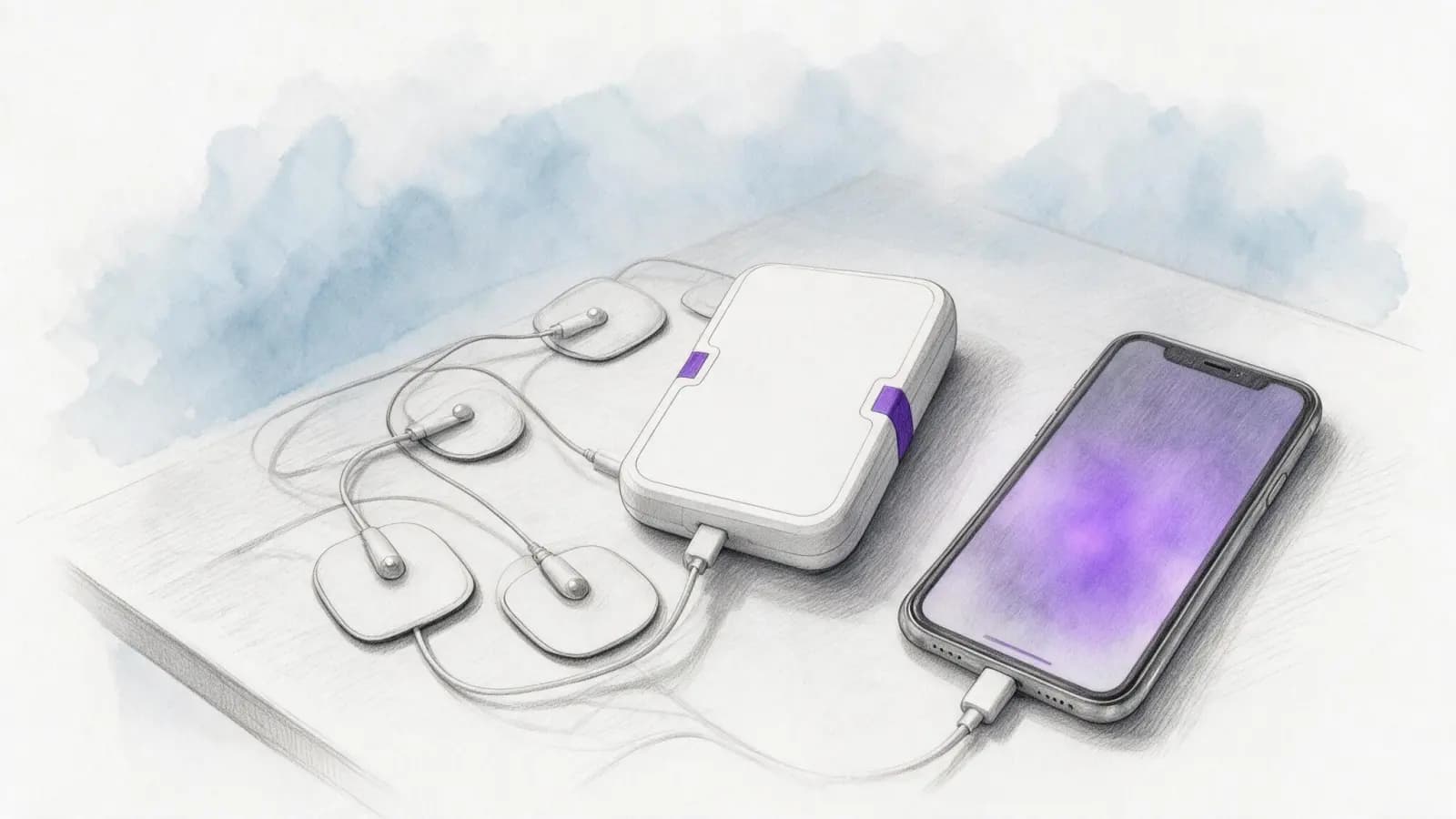
- Two pad types: Non-motorized pads deliver EMS. Motorized pads add vibration and an electromagnetic field to EMS. The hybrid mix in the set is 2 motorized and 3 non-motorized pads.
- Control from your phone: Start, stop and adjust the intensity of a session over Bluetooth in PelviQ App.
- EMS and Kegels together: As guidelines stress, EMS does not replace voluntary exercise; PelviQ App combines device sessions with guided Kegel and breathing exercises in one daily plan.
- Women’s and men’s versions: The device is the same; the pads are designed for each user. Spare pads come in non-motorized, motorized or hybrid packs.
PelviQ is a wellness and exercise product; it is not intended for medical diagnosis or treatment.
Sources
- NICE NG123 — Urinary incontinence and pelvic organ prolapse in women: management
- Cochrane (Dumoulin et al., 2018) — Pelvic floor muscle training for urinary incontinence in women
- NIDDK — Kegel Exercises
This article is for general information and does not replace medical diagnosis or treatment. See a healthcare professional if you have pain, bleeding, fever or ongoing symptoms.